Patrick Boyde FBA (b. 1934)
Professor of Italian (1981–2002)

A Career in Four Phases
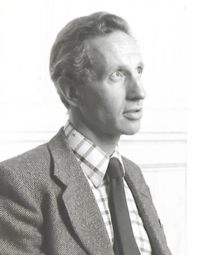
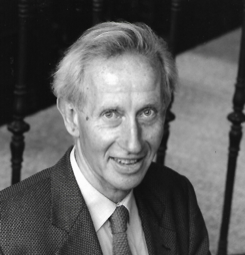
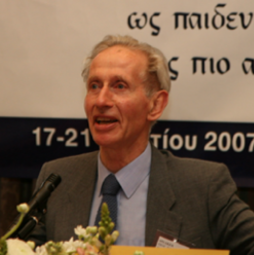
Patrick Boyde is Emeritus Professor of Italian in the University of Cambridge. Born in 1934, he is a late starter who has been lucky to survive long enough to finally ‘become what he always was’ (cf. ‘Werde, was du bist!’). He is an interpreter of words, sounds and images from many countries and centuries, whose goal has been to enhance the enjoyment of great works of art for their own sake by sharing his understanding of their original context and bringing them to life in appropriate performance.
A twentieth-century wartime childhood in nineteeth-century rural Essex was followed by tuberculosis and a prolonged convalescence with no schooling from 1948 to 1950, and then by three years of happy but uninspiring grammar-school education. He got into his stride only after he was admitted to St John’s College in 1953, when he started to study Italian…
His academic career may be schematically divided into four phases:
| Principal Publications | Gestation | Principal Focus |
|---|---|---|
| Dante’s Style in his Lyric Poetry (1972) | 1958–1972 | Dante’s Lyrics |
| Dante Philomythes and Philosopher: Man in the Cosmos (1981) Perception and Passion (1991) Human Vices and Human Worth (2000) |
1970–2000 | Dante’s Narrative |
| Boyde’s Classic
Dramas (2024) (acting editions, subtitles, videos etc. for 30 dramatisations in 8 languages) |
2002–2024 | European Poetic Drama |
| Boyde’s Fresco
Cycles (2026) (26 online lectures on pictorial narrative from the Italian Renaissance) |
1985–2001 | Italian Narrative Painting |
The first fifteen years were devoted to the study of Dante’s lyric poetry (in the context of Latin rhetoric and the Romance vernaculars), while the next twenty were given over to the study of Dante’s narrative poem (in the context of scholastic thought).
After his election to the Chair of Italian in 1981, he began to transfer his skills to the visual arts, and became well known in the University for the annual public lectures on Italian narrative painting in which he sowed the seeds which are harvested on the present site. A review gives an idea of what it was like to attend the lectures.
Since his retirement in 2002, he has switched his attention to poetic drama, directing semi-staged performances in the original languages of tragedies and epics by the likes of Sophocles and Mickiewicz (not to mention Homer, Racine and four books of the Bible). You will find films and other materials in the DIY Performance Packs presenting thirty dramatisations on the companion site.
But everything is of a piece. His motivation has not changed. The same rigour informs books, articles, public lectures, theatrical productions, classroom teaching and personal tuition in a great collegiate university. And despite his mistrust of new methodologies and demands for a ‘research culture’ (typically, imported from the social Sciences), his oeuvre does embody a ‘general theory’ of education in the Arts.
Whether the object of study is a lyric or a narrative, an epic or a drama, a symphony or a fresco-cycle, he believes it must be approached on its own terms and for its own sake, yet with an awareness of its own context. The starting-point should also be the finishing-line, namely, the literal or metaphorical reading of a text. ‘A poem is like a picture’, wrote Horace, ut pictura, poesis; and, conversely, ‘a picture is like a poem’, ut poesis, pictura.
(Is that mere wordplay? The proof of the pudding will be in the eating. Or, as we used to say in more familiar language: ‘Suck it and see.’)